If you want a clear picture of where wealth is heading in the U.S., stop looking only at Silicon Valley and start watching the skilled trades. The next wave of American millionaires is being built in hard hats, steel-toe boots, and welding hoods—because the economy is colliding with a simple reality: we can’t build, repair, expand, or “reshore” anything without skilled hands.
For decades, the cultural message was “college = success.” Meanwhile, the country quietly hollowed out its blue-collar pipeline. Now we’re paying the price: an aging workforce, fewer new entrants, and exploding demand across manufacturing, infrastructure, energy, commercial construction, and defense. Deloitte and The Manufacturing Institute have warned that as many as 1.9 million manufacturing jobs could remain unfilled by 2033 if the talent gap persists.
This isn’t just a “jobs” story. It’s a pricing power story. In any market—labor included—when demand rises and supply tightens, the value of the scarce skill increases. That’s the economic engine behind why tradespeople, especially welders, are positioned to build serious wealth over the next decade.
The Trades Are Becoming the Highest-Leverage Path to Wealth
Let’s be blunt: wealth is created when you can do one (or more) of these things:
- Earn strong income and keep expenses controlled
- Avoid massive debt while building in-demand skills
- Work in industries with consistent demand (not trends)
- Convert a skill into a business, a specialty, or a scalable service
The trades check every box. Many skilled trades careers have shorter training timelines than traditional degrees, a faster runway to income, and far less student debt—meaning you can begin investing, buying assets, and building credit earlier.
And as the U.S. pours money into infrastructure, manufacturing facilities, energy projects, transportation systems, and industrial expansion, the trades are the bottleneck that determines whether projects get done on time.
Deloitte reports U.S. manufacturing employment is near 13 million (as of January 2024) and highlights major investments in new facilities and capacity expansion—growth that intensifies the need for skilled labor.
Why Welding Sits at the Center of the American Economy
Welding isn’t “just a job.” Welding is the physical language of industry—the process that joins the modern world together. If it’s made of metal (or repaired with metal), welding is involved somewhere along the chain.
Welders touch:
- Infrastructure: bridges, highways, rail, water systems
- Construction: structural steel, commercial builds, warehouses
- Energy: pipelines, refineries, power plants, wind/solar fabrication
- Manufacturing: equipment, tooling, heavy machinery, production lines
- Transportation: trucks, ships, aerospace components, railcars
- Defense: shipbuilding, maintenance, armored systems, facilities
If welding slows down, projects stall. When projects stall, costs rise. When costs rise, everyone downstream pays—contractors, manufacturers, municipalities, and consumers. That makes welding one of the most economically “valuable per hour” skills in the skilled trades ecosystem, especially at higher certifications and tougher work environments.
The Welding Shortage Is Real—and the Numbers Back It Up
This is where the “next wave of millionaires” theme becomes concrete: the market is screaming for welders.
According to the American Welding Society’s workforce data, the U.S. is projected to need 320,500 new welding professionals by 2029, with an average of 80,000 welding jobs to be filled annually from 2025–2029.
AWS also estimates about 771,000 welding professionals in the U.S. as of 2025 and notes more than 157,000 are approaching retirement—which helps explain why the pipeline pressure is so intense.
From the government side, the U.S. Bureau of Labor Statistics projects about 45,600 openings per year (on average) for welders, cutters, solderers, and brazers over the decade, with a median annual wage of $51,000 (May 2024).
Those are not “maybe someday” numbers. That’s persistent demand driven by retirements, growth, and ongoing replacement hiring.
Why This Shortage Creates Millionaire-Level Upside
High demand alone doesn’t automatically make someone wealthy. The millionaire upside comes from how tradespeople can convert demand into compounding value.
1) Overtime, per diem, and premium projects
When employers can’t find enough qualified welders, schedules tighten. Tight schedules create overtime. Big jobs create travel incentives and per diem. Specialized projects create premium pay.
2) Specialization = scarcity inside scarcity
A general welder is valuable. A specialized welder becomes a weapon in the labor market.
High-value welding lanes often include:
- Structural welding (commercial/industrial steel)
- Pipe welding (industrial piping, energy, process plants)
- Stainless/aluminum TIG (food-grade, sanitary, aerospace-adjacent fabrication)
- Certified Welding Inspector (CWI) pathways
- Code-based work tied to specific standards and testing requirements
Specialization increases bargaining power and makes it easier to command higher rates—especially when you can pass tests consistently.
3) Welding is one of the most “business-friendly” trades
Welding is unusually entrepreneurial. With skill + safety discipline + the right equipment, welders can build businesses such as:
- Mobile welding and repair
- Trailer/fence/gate fabrication
- Small commercial structural contracts
- Custom metalwork (stairs, railings, supports)
- Maintenance contracts for local manufacturers
- Subcontract welding for larger shops
In other words: welding can shift from hourly income to owner income, which is where wealth accelerates.
4) Lower debt = earlier investing (the “time advantage”)
Many tradespeople begin earning earlier than peers pursuing longer degrees. That means earlier contributions to:
- Emergency funds
- Retirement accounts
- Index investing
- Real estate down payments
- Tools and equipment that expand earning power
Time + consistent investing is how “middle-class income” becomes “millionaire net worth” over a career.
Welding’s Economic Value: Why the U.S. Can’t Replace This Skill
People love to say, “Robots will take all the jobs.” In reality, welding automation tends to increase demand for skilled workers—because automation still needs:
- Setup and programming
- Fixturing and fit-up
- Quality control
- Repair and rework
- Human welders for complex joints, field work, and irregular conditions
And even with tech improvements, there’s a huge category of welding that’s stubbornly physical: field welding, structural work, pipe welding in tight spaces, repairs on existing systems, and jobs where conditions aren’t perfect.
Meanwhile, companies across the U.S. are trying to rebuild pipelines for skilled workers because they can’t staff critical roles fast enough—another sign the trade shortage is not theoretical.
Projected Shortages: Why the Problem Doesn’t “Fix Itself” in the Near Future
The shortage isn’t just about recruiting. It’s about demographics and timing:
- Retirements are accelerating in the skilled trades
- Demand is rising from infrastructure + industrial investment
- Training pipelines take time to scale
- Many roles require passing performance tests, not just showing up
In manufacturing broadly, the workforce gap is projected to remain a major constraint through the next decade, with potentially 1.9 million roles unfilled by 2033 if solutions don’t ramp fast enough. Welding sits directly inside that story—because manufacturing, construction, energy, and defense all rely on joining and fabrication.
How to Position Yourself to Become a High-Earning Welder (and Build Wealth)
If you want millionaire upside as a tradesperson, treat welding like a profession—not a fallback.
Step 1: Build a strong foundation
Master the fundamentals:
- Safety and PPE discipline
- Joint prep and fit-up
- Reading weld symbols and basic prints
- Consistency in bead control and penetration
Step 2: Choose a lane with demand
Pick a direction that matches your goals:
- Shop fabrication
- Structural field welding
- Pipe and industrial
- TIG specialties (stainless/aluminum)
- Inspection track (long-term leverage)
Step 3: Stack credentials and real proof of skill
In welding, skill is verified. Tests matter. Certs matter. Repeatable quality matters.
Step 4: Think like an owner (even if you’re an employee)
Wealthy tradespeople track:
- Hourly rate + overtime potential
- Total compensation (benefits, per diem, travel)
- Skill upgrades per quarter
- Savings rate and investing automation
- Tool ROI and business readiness
The Bottom Line: The Next Wave of Millionaires Will Be Builders
The U.S. is entering an era where real skills are scarce, and scarce skills get paid. Welding is one of the clearest examples: it’s essential, measurable, difficult to replace, and in chronic shortage—exactly the type of work that creates long-term leverage.
The opportunity is simple: become the person the economy can’t function without.
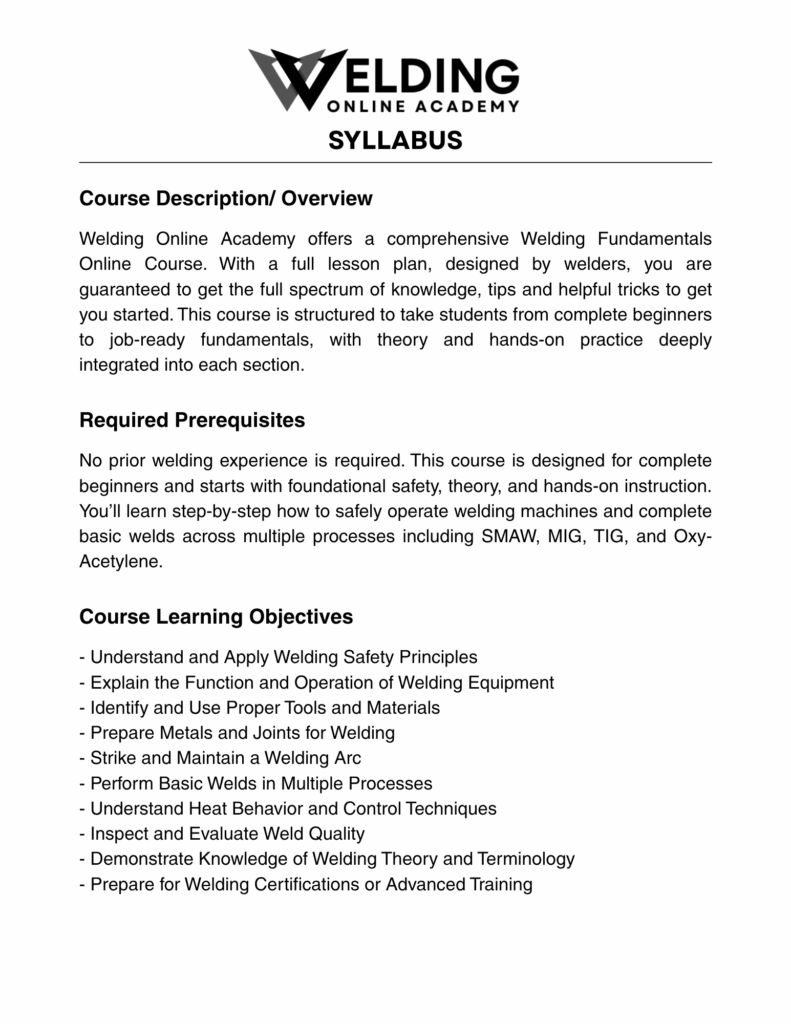
Ready to Start? Register for a Welding Online Academy Course Today
If you’re serious about turning welding into a career with real earning power—and a future that can build wealth—don’t wait for the shortage to “solve itself.” It won’t.
Register for a Welding Online Academy course today and start building the fundamentals, the confidence, and the skill stack that employers (and future customers) are actively hunting for.
Your future income is tied to one thing: how valuable your skills are. Welding is one of the best bets in America right now.