If you’ve ever looked at the welding industry and wondered, “How do I get started if nobody will hire me without experience?” — you’re not alone. Many new welders face the same challenge: employers want skill, but entry-level workers need opportunities to develop those skills. The good news? Welding is one of the few careers where determination, practice, and proper training can fast-track you into a job even if you’ve never worked in a shop before.
With the U.S. facing a major skilled-trade shortage and thousands of open welding positions nationwide, now is one of the best times in history to pursue welding — even with zero professional background. This guide will show you exactly how to break into the field, build skills employers value, and land your first welding job.
Understand Why Welding Is One of the Easiest Trades to Break Into
Welding doesn’t require a four-year degree, years of apprenticeships, or expensive schooling. The barrier to entry is surprisingly low. Most shops care about two things:
- Can you weld safely?
- Can you produce a strong, clean weld without supervision?
That’s it.
If you can demonstrate basic competency — even outside of a paid job — you can get hired. Many employers offer on-the-job training and are willing to invest in someone who shows initiative, learning ability, and discipline.
The fastest way to show these qualities is by completing structured training, producing real welds, and presenting a certificate that validates your effort.
Start With the Right Training (Online Welding Courses Are Now Accepted)
You don’t need to attend a $10,000+ trade school to begin your welding journey. Online courses can now give you the same foundational education — and employers respect certificates that demonstrate real progression.
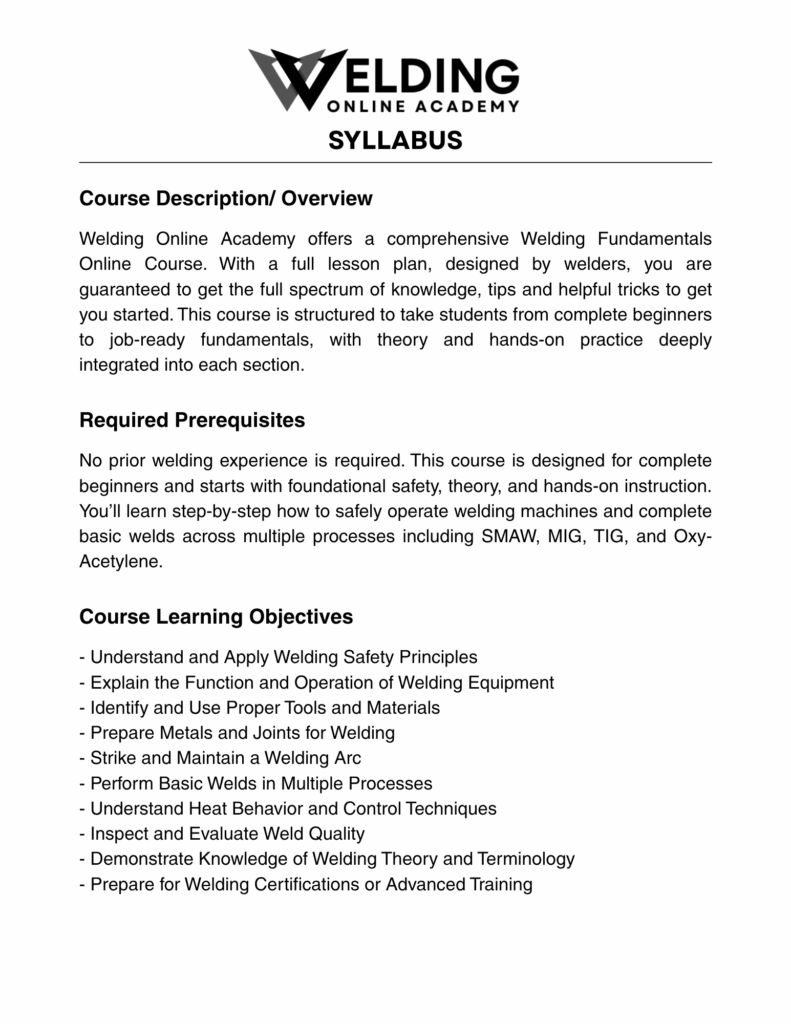
A great place to start is the Welding Fundamentals Online Course from Welding Online Academy:
https://weldingonlineacademy.com/courses/welding-fundamentals-online-course/
This course teaches you everything needed to start practicing safely:
- Equipment setup
- Basic welding terminology
- Metal preparation
- Heat and puddle control
- Joint types
- Entry-level welding techniques
When you finish, you earn a Certificate of Completion, which shows employers you’ve taken your training seriously.
From there, you can take more specialized courses to build real technical skill:
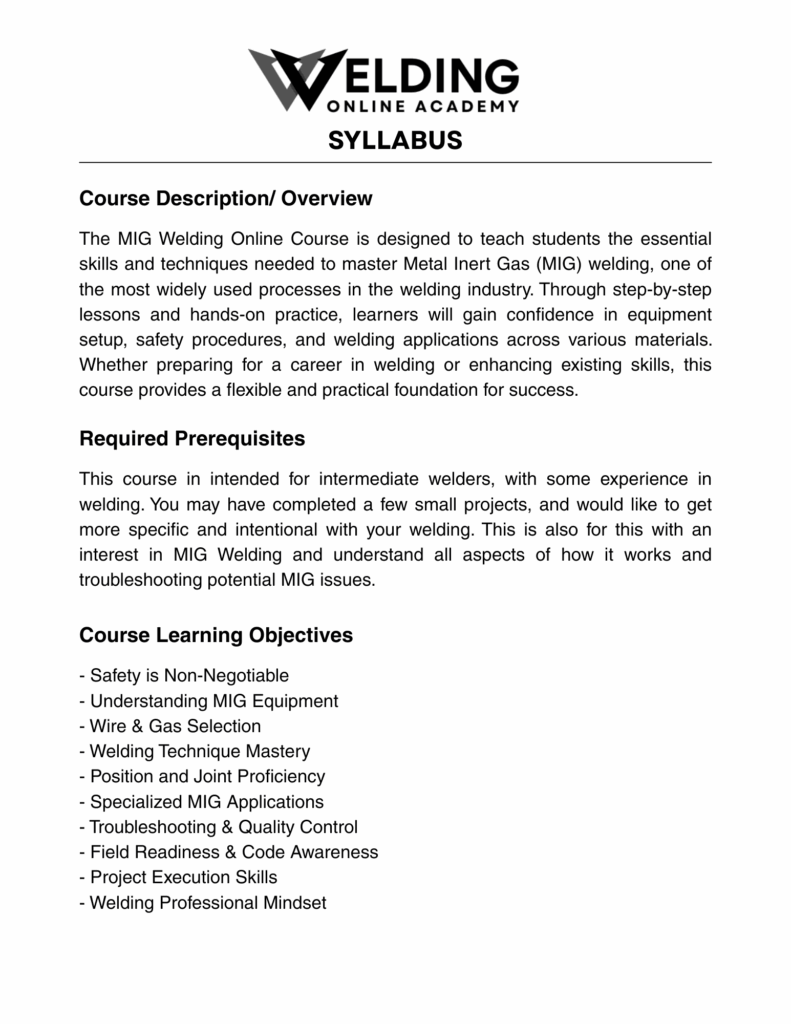
MIG Welding Online Course
https://weldingonlineacademy.com/courses/mig-welding-online-course/
MIG is the most commonly requested skill in fabrication shops, repair facilities, automotive environments, and production lines. A certificate in MIG welding makes you far more competitive for entry-level jobs.
Oxy-Acetylene Welding (OAW) Online Course
https://weldingonlineacademy.com/oaw-welding-online-course/
Shops love workers who know how to weld, cut, and braze using OAW. Even if you never use it as your main process, it makes you a stronger, more versatile candidate.
Why online certificates matter:
When you apply for a job, you’re competing with beginners who have nothing to show — no proof of training, no documentation, no track record. A certificate instantly separates you from the pack and shows employers you’re motivated, teachable, and committed to the trade.
Build a Simple Welding Portfolio (Even If You’re a Beginner)
Portfolio? For welding?
Absolutely.
A welding portfolio is a small collection of photos (or short videos) that show:
- Your practice welds
- Your progression from first attempts to cleaner beads
- Any small projects you’ve completed
- Different joint types (butt, lap, fillet, T-joint)
- Different positions (flat, horizontal, vertical)
Employers love portfolios because they reveal your hands-on ability better than a resume ever could.
How to build one:
- Collect 10–15 clear photos of your welds.
- Include a mix of practice plates and small projects.
- Add a short explanation of each (material, process, settings).
- Keep it simple — a Google Drive folder works perfectly.
If you take a Welding Online Academy course, you’ll complete guided skill-building exercises and a capstone project — perfect pieces for your portfolio.
Get Basic Practice Time (Even Without High-End Equipment)
You don’t need a full workshop or thousands in tools to start learning to weld. Many beginners do one of the following:
Option 1: Use a friend’s or family member’s machine
Welders love showing newcomers the ropes. A few sessions can build confidence fast.
Option 2: Rent time at a local maker space or community shop
Many cities have welding booths you can rent for $10–$20 an hour.
Option 3: Buy an entry-level MIG welder
A basic 120V MIG setup is often around $200–$350 and is perfect for beginners.
Option 4: Use Oxy-Acetylene equipment
If you don’t have electricity or MIG equipment, OAW is extremely affordable and highly effective for learning heat control — one of the most important skills in welding.
Remember: Employers hire for skill, not equipment. You just need somewhere to practice.
Learn to Speak the Language of Welders (Shops Notice Immediately)
One thing that separates new hires from “people who applied once and weren’t ready” is communication.
Employers want to hear things like:
- “I understand how to manage puddle control.”
- “I’m comfortable welding a T-joint in the flat and horizontal positions.”
- “I know how to maintain proper stickout in MIG welding.”
- “I can identify porosity, undercut, and lack of fusion.”
When you speak the language of the trade, employers see you as someone who already belongs in the shop.
This is one of the biggest benefits of taking a structured course — you learn exactly how professionals think and talk about the craft.
Target the Right Entry-Level Welding Jobs
Not all welding jobs require experience. Many employers hire beginners and train them. Instead of searching for “Welding Job Near Me”, learn what positions are right for you and target them specifically.
Here are positions well-suited for newcomers:
- Welding helper
- Shop assistant
- Production welder
- Automotive welder trainee
- Fabrication apprentice
- Maintenance welder assistant
- Metal shop laborer
- Manufacturing line welder
In these roles, supervisors teach you:
- Machine setup
- Safety procedures
- Welding sequences
- Shop expectations
- How to build consistency
Your job is to show effort, learn quickly, and produce clean work.
Make a Simple, Clear Welding Resume
Welding resumes don’t need to be complicated. In fact, many beginners get hired with a single page that highlights:
- Training completed (courses, online certifications, workshops)
- Processes practiced (MIG, OAW, cutting, brazing)
- Any hands-on experience, even if unpaid
- A link to your welding portfolio
- Soft skills (reliable, safety conscious, fast learner)
Tip: Place your certificates at the top. They grab attention instantly.
Network With Welders (Jobs Come From People, Not Websites)
Here’s a secret: Most beginner welding jobs are never posted online. They’re filled through:
- Word of mouth
- Shop owners calling past employees
- Recommendations from instructors
- Friends or family in the trades
To network effectively:
- Visit local welding shops
- Ask if you can tour the shop
- Attend welding meet-ups or maker events
- Join online welding communities
- Introduce yourself at trade supply stores
Tell people you’re learning the craft and looking for your first opportunity. Welders help welders — the community is very supportive.
Why Certificates From Welding Online Academy Help You Get Hired Faster
A certificate doesn’t replace experience — it creates an opportunity to get experience.
Welding Online Academy’s certificates demonstrate:
- You understand safety
- You know equipment preparation
- You’ve practiced real welding techniques
- You’re committed and disciplined
- You’ve completed structured assessments
- You’ve built a project and proved your skills
Employers love hiring people who take initiative. Taking courses like:
- Welding Fundamentals Online Course
- MIG Welding Online Course
- Oxy-Acetylene Welding Online Course
…shows them you’re already invested in welding as a career.
The Fastest Way to Get Hired: Combine Training, Practice, and Persistence
Here’s the truth: You can absolutely land a welding job with no previous shop experience.
You simply need:
- Training (online courses with certificates)
- Practice (even at home or rented space)
- A portfolio (photos of welds and projects)
- A simple resume
- Persistence and willingness to learn
If you follow these steps, your lack of professional experience won’t hold you back.
Ready to Start Your Welding Career?
The best first step is to get structured training and earn a certificate proving your dedication. Check out the full course lineup here:
Welding Fundamental Online Course
https://weldingonlineacademy.com/courses/welding-fundamentals-online-course/
MIG Welding Online Course
https://weldingonlineacademy.com/courses/mig-welding-online-course/
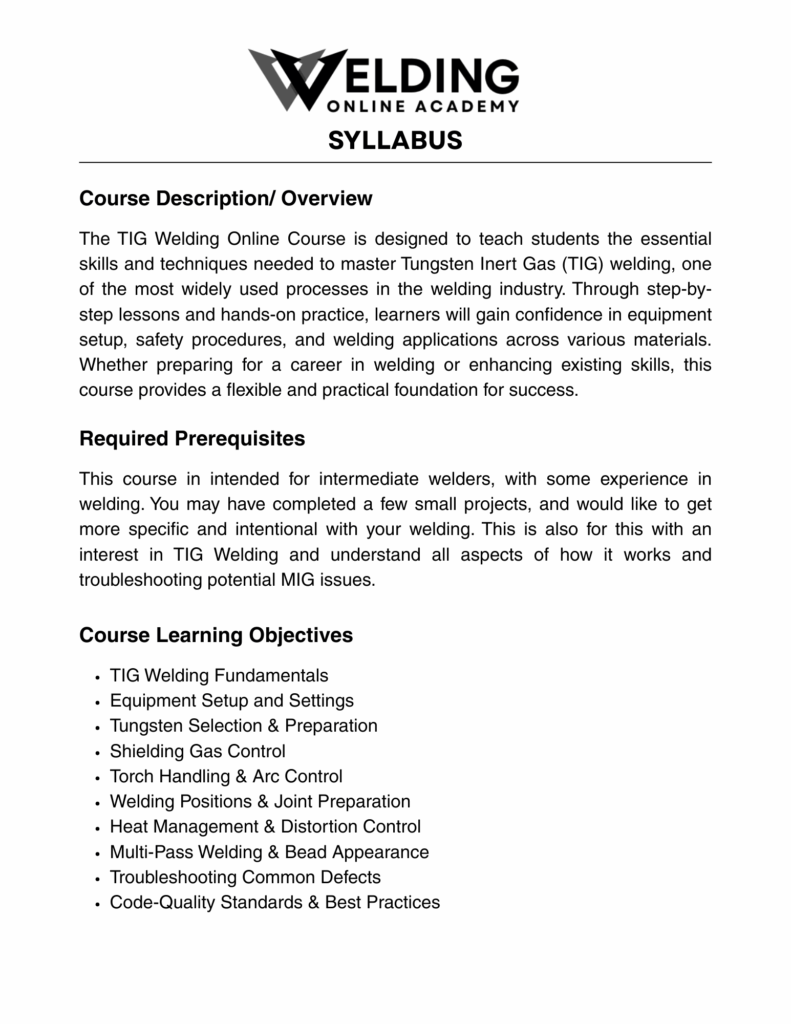
TIG Welding Online Course
https://weldingonlineacademy.com/courses/tig-welding-online-course/
Oxy-Acetylene Welding (OAW) Course
https://weldingonlineacademy.com/oaw-welding-online-course/
These courses are built to help beginners quickly build the skills and confidence needed to secure an entry-level welding job — even with no previous experience.